


Lotes relacionados
-
Lote arrematado
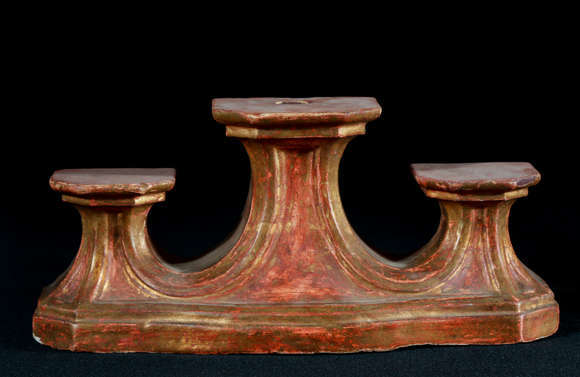
Lote 884 - Ao vivo!
Base em madeira destinada a imagens de calvário, a saber, Nossa Senhora das Dores, a Cruz, ao centro, e São João Evan...
-
Lote arrematado
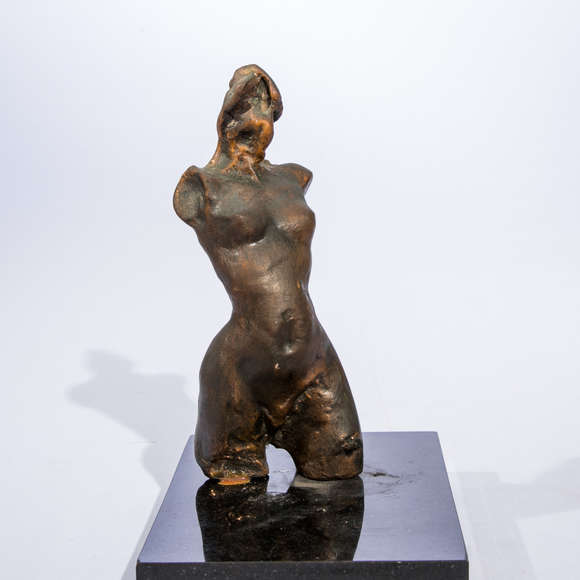
Lote 1069 - Ao vivo!
IMRE VARGA (Siófok, Hungria, 1923) "Triomphe I. Nike d'eau". Bronze. Base em mármore negro. Sem assinatura aparente. ...
-
Lote arrematado
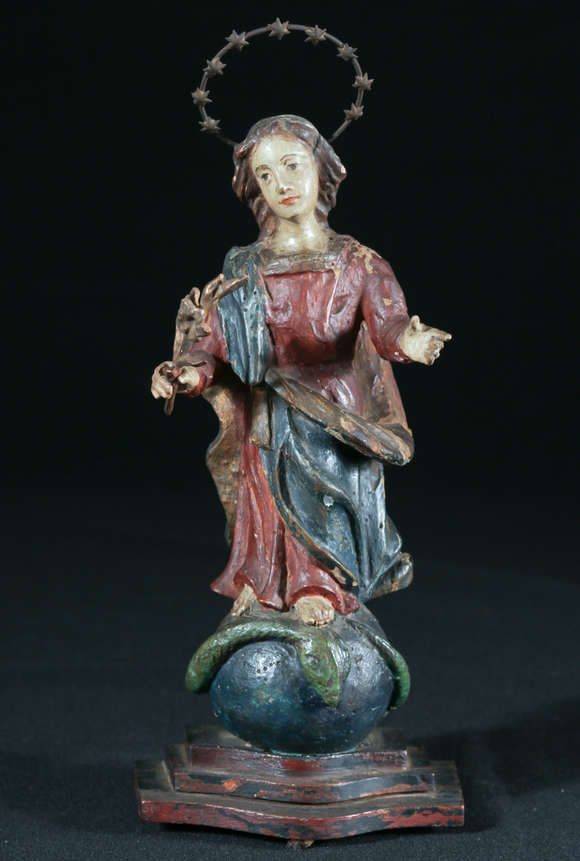
Lote 441 - Ao vivo!
Imagem de Nossa Senhora entalhada em madeira e possivelmente repintada. Baviera, século XVIII. A Virgem aparece aqui ...
-
Lote arrematado
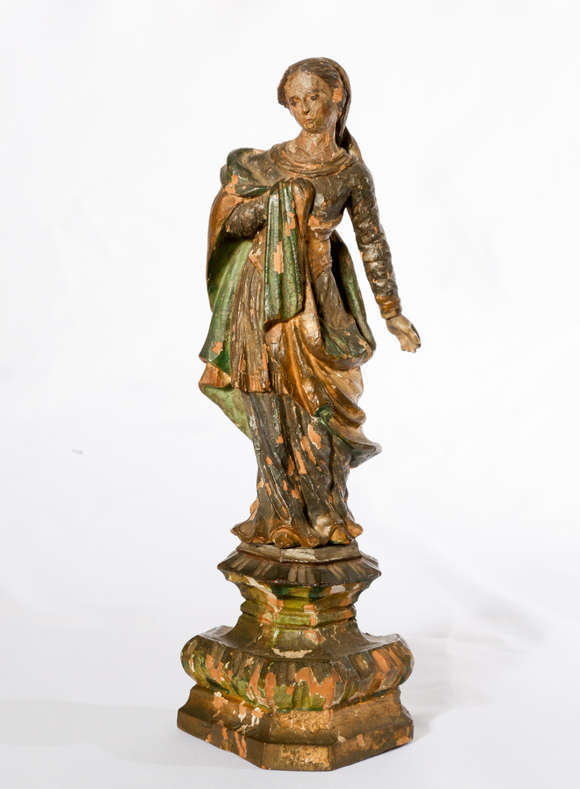
Lote 369 - Ao vivo!
Imagem de Santa Isabel de Hungria entalhada, policromada e dourada. Baviera, século XVIII. A rainha aparece represent...
-
Lote arrematado
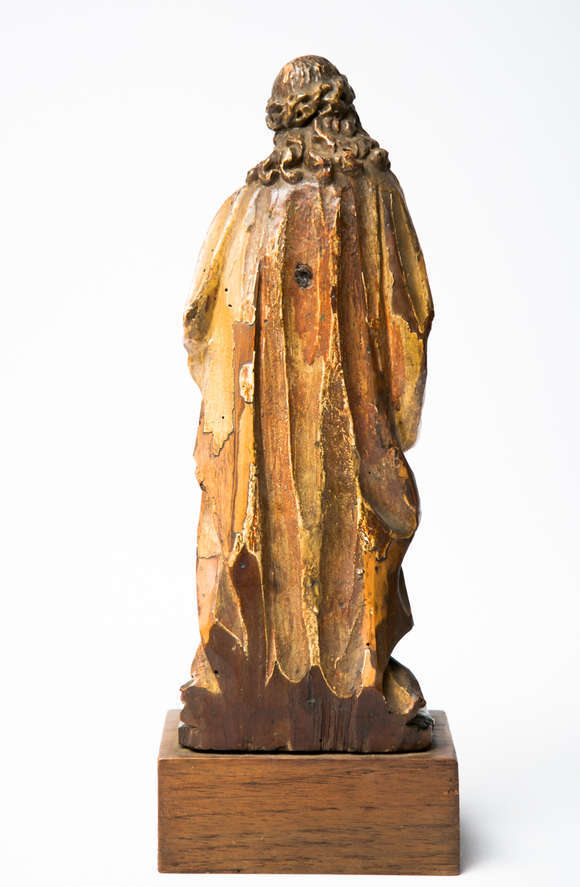
Lote 1061 - Ao vivo!
Imagem entalhada em madeira, encarnada e pintada representando Jesus Cristo no momento em que Pôncio Pilatos o apres...
-
Lote arrematado
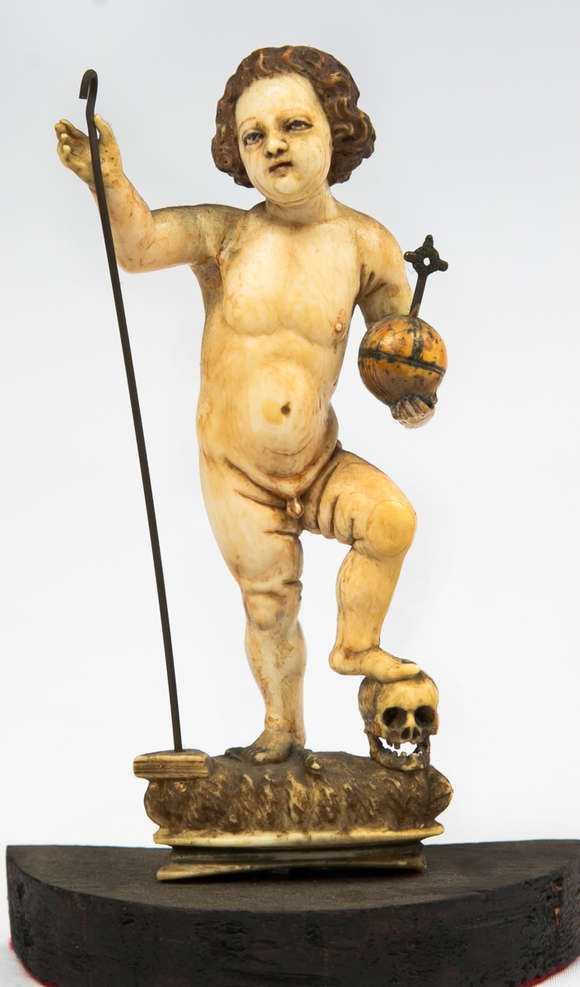
Lote 89 - Ao vivo!
Imagem de Menino Jesus com o pé esquerdo sobre crânio entalhada em marfim. Espanha, possivelmente de sua colônia fili...
-
Lote arrematado
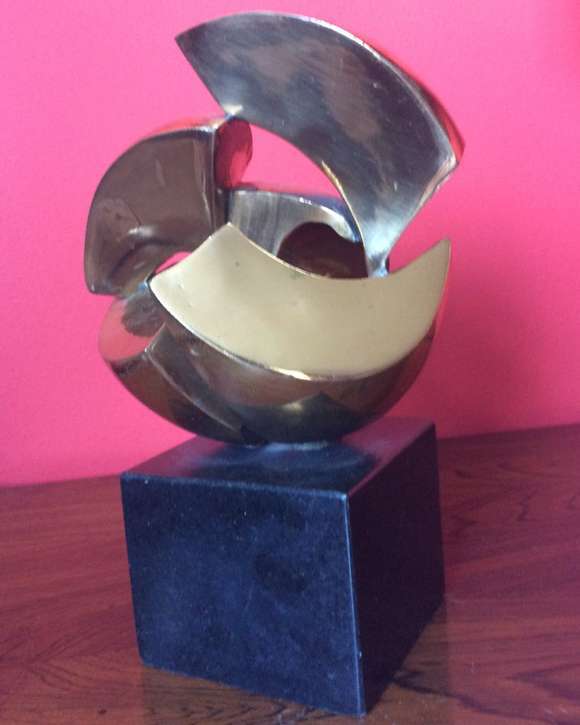
Lote 224 - Ao vivo!
BRUNO GIORGI (Mococa, São Paulo, 1905 - Rio de Janeiro, 1993) "Meteoro" Bronze dourado sobre base cúbica em granito n...
-
Lote arrematado
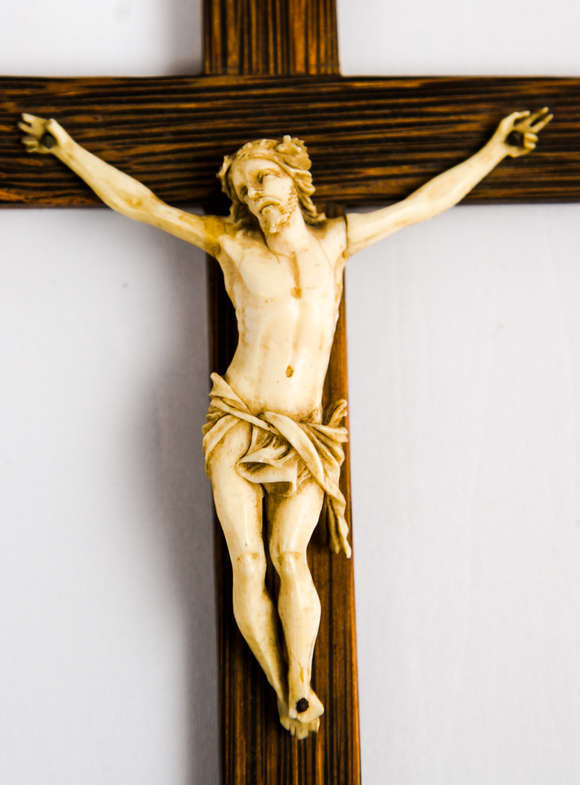
Lote 640 - Ao vivo!
Crucifixo de origem européia com a imagem de Nosso Senhor Jesus Cristo entalhada em marfim. Século XIX. A cruz aprese...
-
Lote arrematado
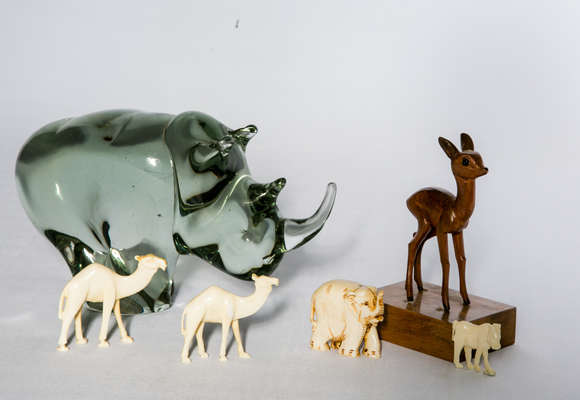
Lote 899 - Ao vivo!
Conjunto composto de um elefante (altura: 0. 043 m.), um cavalo (altura: 0. 03 m.) e dois dromedários em marfim, um d...
-
Lote arrematado
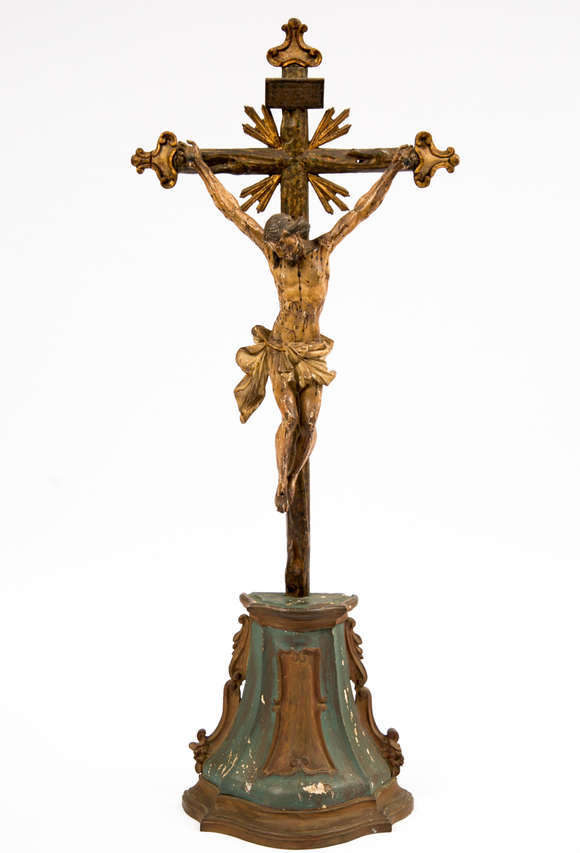
Lote 670 - Ao vivo!
Crucifixo entalhado em madeira simulando lenho de árvore sem polimento. Brasil, Minas Gerais, terceiro quartel do séc...
-
Lote arrematado
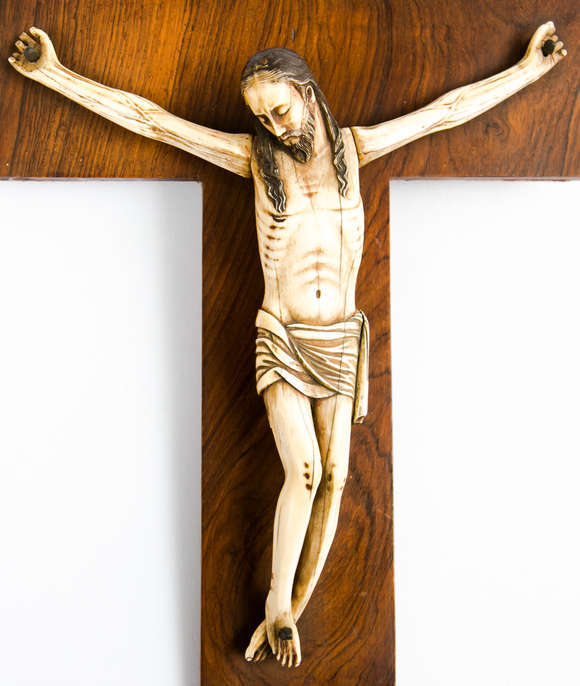
Lote 106 - Ao vivo!
Imagem de Nosso Senhor Jesus Cristo entalhado em marfim e com vestígios de policromia. Arte espanhola colonial, de pr...
-
Lote arrematado
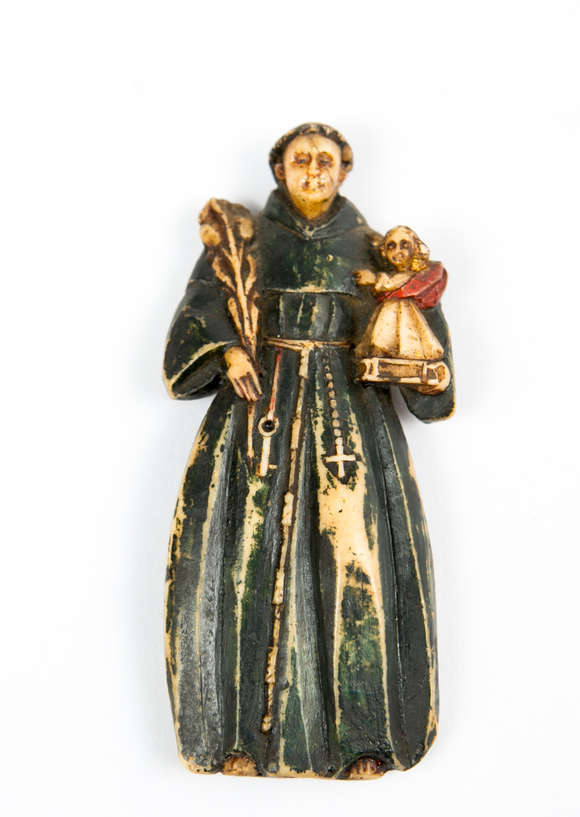
Lote 107 - Ao vivo!
Imagem de Santo Antonio com o Menino Jesus em pedra berenguela, conhecida também como piedra de huamanga, variação de...
-
Lote arrematado
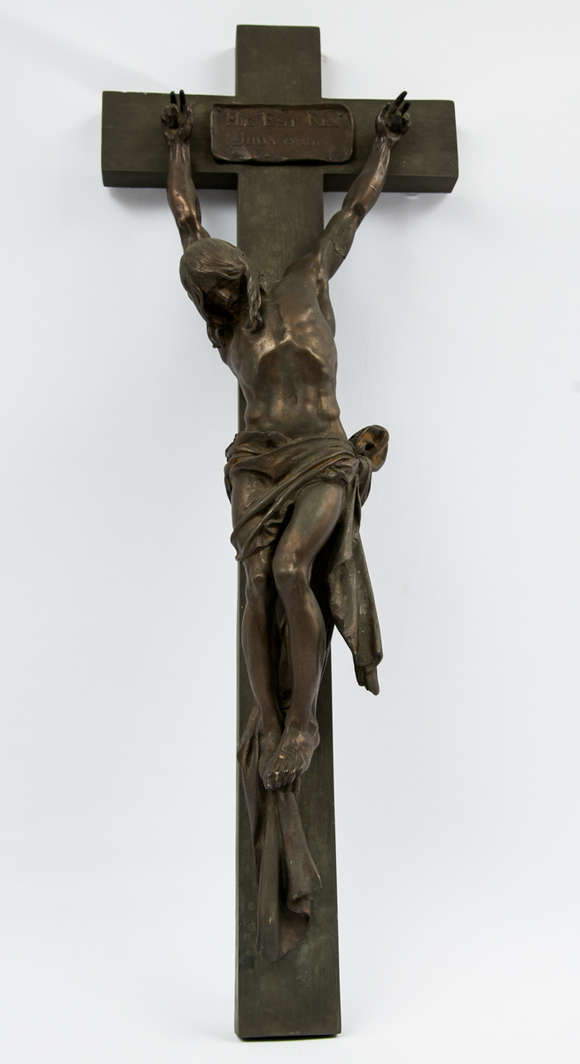
Lote 1094 - Ao vivo!
JOSEF VACLAV MYSLBEK (Checoslovaquia 1848 - 1922) Crucifixo em bronze. O Cristo é representado em modelo convencional...
-
Lote arrematado
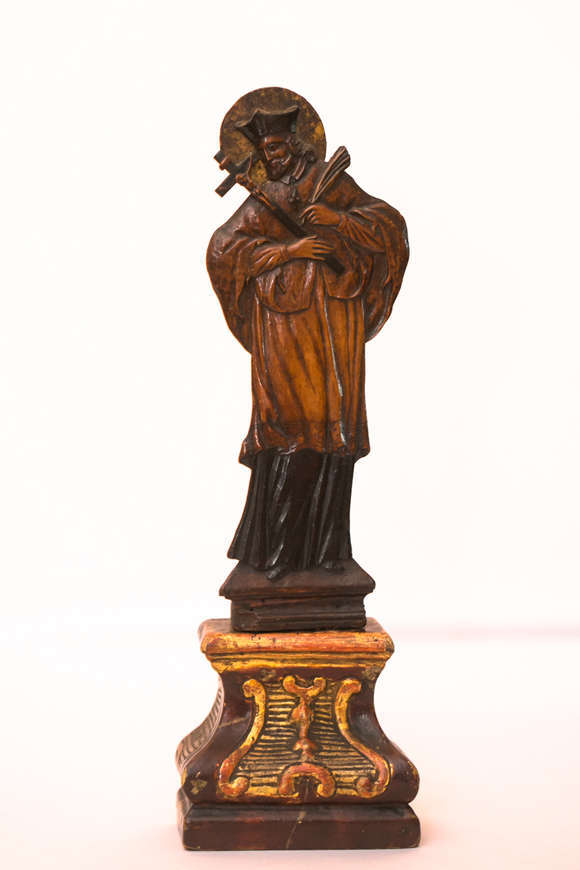
Lote 706 - Ao vivo!
Imagem de São João Nepomuceno à maneira de uma silhueta recortada em madeira e tratada em baixo relevo. Boêmia, sécu...
-
Lote arrematado
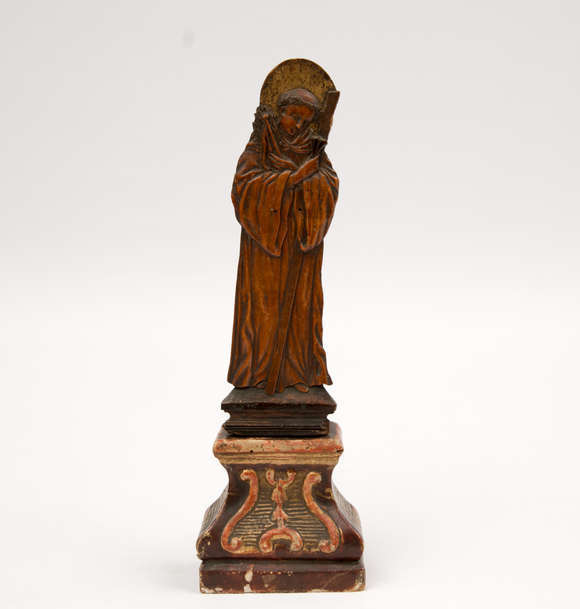
Lote 419 - Ao vivo!
Imagem de Santo frade à maneira de uma silhueta recortada em madeira e tratada em baixo relevo. Boêmia, século XVIII...
